
We move forward in time to the year 1918, when the Great War was drawing to a close. The Turks have been driven out of the Euphrates Valley and the British army was in control. One of the British officers in the area was Major R Campbell Thompson, attached to the intelligence staff of the army and stationed near Tell el Muqayyar.
It so happened that in private life before the war started, Thompson had been an assistant in the British Museum. Unsurprisingly, he took more than a casual interest in the towering ziggurat and the telltale mounds surrounding it. In fact, as opportunity provided, he did a little excavating on the spot. He was impressed with what he found and sent a recommendation back to the British Museum that it would be worth mounting a full-scale expedition to this place.
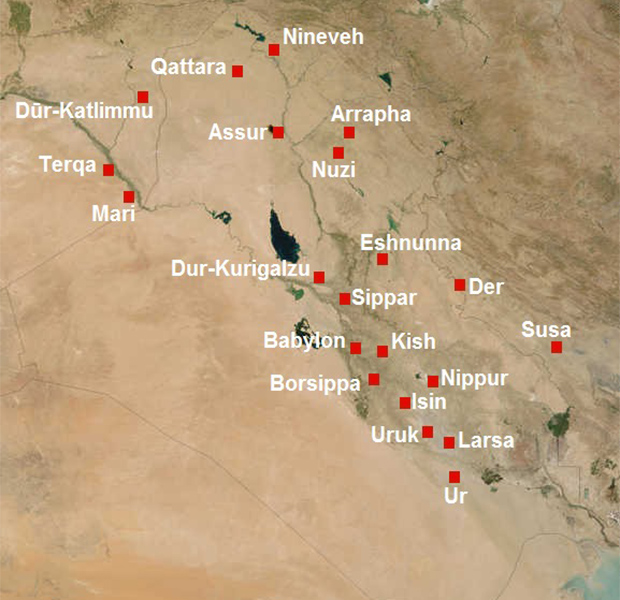
In response to Thompson’s advice, the British Museum commissioned Dr H R Hall to commence excavations. He arrived late in 1918 and made some experimental soundings at Tell el Muqayyar and also at nearby sites, Eridu and Al Ubaid. The latter revealed they were looking at what could prove to be the world’s earliest civilisation. Lack of adequate funds curtailed further digging, but they had done enough to demonstrate further excavations were more than warranted.