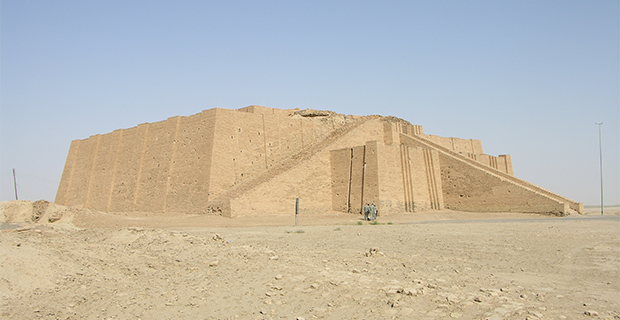
In the whole of the Bible, there are only four references to Ur of the Chaldees and all of these refer to the same event: the patriarch Abraham (or Abram, as he was then called) leaving Ur. Typical of these references is Genesis 11:31 where the Bible says, “Terah took his son Abram and his grandson Lot, the son of Haran, and his daughter-in-law Sarai, his son Abram’s wife, and they went out with them from Ur of the Chaldeans to go to the land of Canaan.”
Because there were no references to Ur of the Chaldees in the writings of the ancient historians, the critics concluded the place was another Bible legend. “No such city ever existed, or if it did exist, it was some obscure village in the deserts of Mesopotamia and Abram was just some insignificant wandering nomad,” they surmised. And so the existence of Ur was doubted and certainly its location was unknown.
Now let us forget about Ur of the Chaldees for a moment and come down to southern Iraq, where there is a very interesting ziggurat, or temple tower, known to the local people as Tell el Maqayyar, meaning “mound of pitch,” so named because the bricks of the ziggurat are stuck together with bitumen or pitch. It is obviously an important ruin, but what was it? What city had been here? What nation was responsible for this great edifice? These questions were unanswered for a long time.